Failing retaining wall signs tend to show up gradually, which is exactly why they are so easy to ignore until the wall is beyond saving. A wall does not usually collapse overnight; it warns you for months, sometimes years, before it lets go. If you can read those warnings early, you can often fix the wall with drainage and a repair for a fraction of the cost of a full rebuild. Here is what to watch for on your Gold Coast block, and what each sign is really telling you.
The Warning Signs to Watch For
Most failing walls show one or more of the same tell-tale signs. Keep an eye out for any of these:
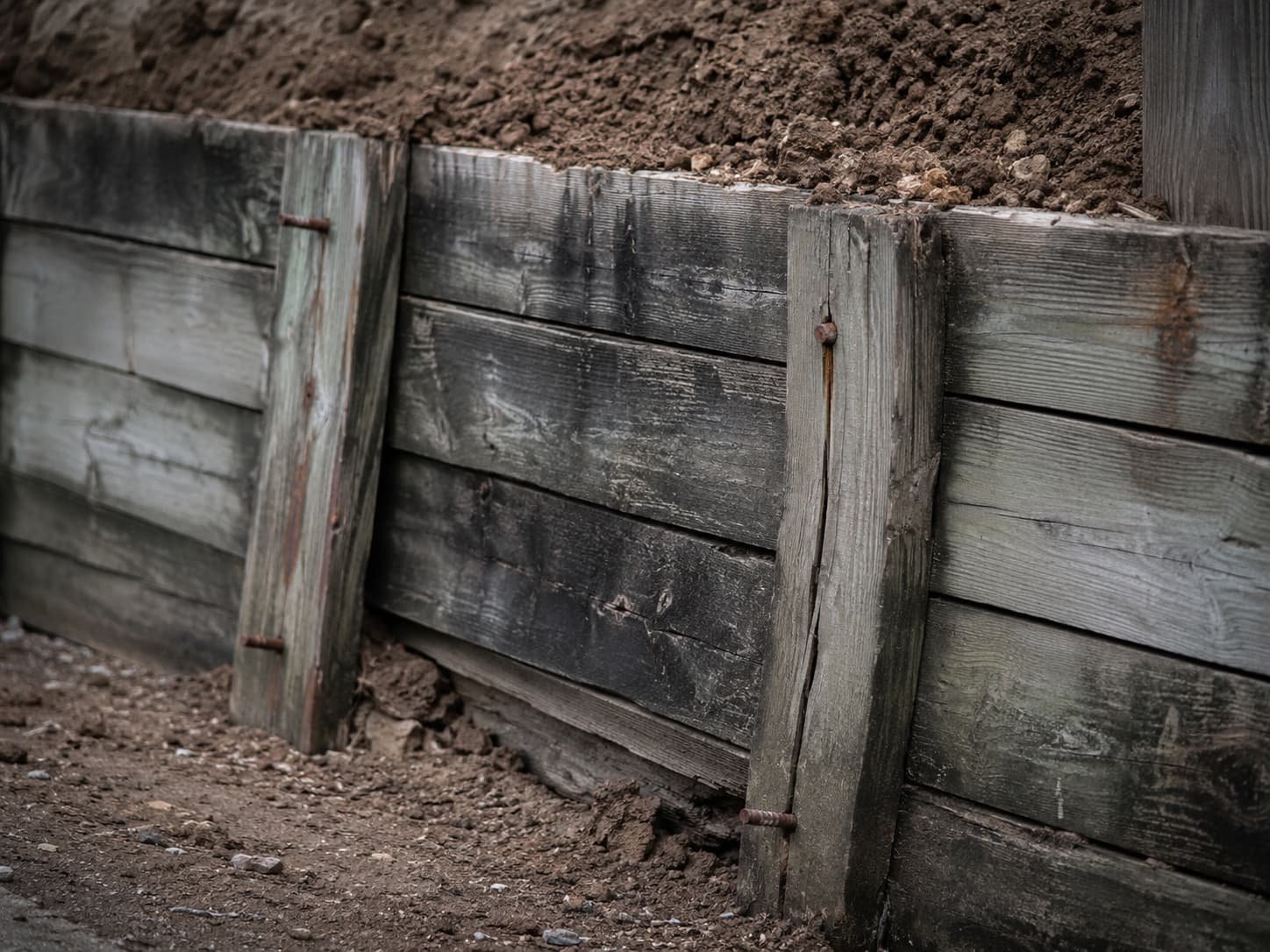
- Leaning or bulging. If the wall is tilting forward or the middle is bowing out, soil pressure is winning. This is the clearest sign that a wall is in trouble.
- Cracking. Cracks through timber, blocks or render mean the wall is under stress it was not built for. Stepped or diagonal cracks in a block wall are especially worth acting on.
- Separating joints. Gaps opening between sleepers, blocks or sections show the wall is pulling apart.
- Soil or water seeping through. Mud, staining or water weeping through the face means water is trapped behind the wall with nowhere to drain.
- Movement after heavy rain. If the wall shifts, leans further or weeps noticeably more during the wet season, drainage is the problem.
- Rotting timber or rusting posts. On older walls, soft, crumbling timber or rusted, weakened steel posts mean the structure itself is giving out.
The Real Reason Walls Fail
Almost every failing wall on the Gold Coast comes back to one root cause: water. When a wall is built without proper drainage, every wet season soaks the soil behind it, and that trapped water has nowhere to go. The pressure it creates, called hydrostatic pressure, pushes relentlessly against the wall until it leans, cracks or moves. Our heavy subtropical downpours and the reactive clay through much of the hinterland make this worse, because saturated clay swells and shoves even harder.
The other causes are usually age and shortcuts. Timber walls eventually rot, steel posts eventually rust, and walls built without engineering or without a footing sized for the soil were always going to struggle. But even those failures are sped up enormously when drainage is missing, because constant moisture is what rots, rusts and undermines a wall in the first place.
What to Do If You Spot These Signs
The single most important thing is to act early. A wall that is leaning slightly today can often be saved by retrofitting drainage and carrying out a targeted repair. The same wall left through another wet season may move far enough that a full rebuild becomes the only safe option. Catching it early is the difference between a modest repair bill and a major one.
Start with an honest assessment. Our retaining wall drainage and repairs service exists for exactly this: we come out, work out why the wall is moving, and tell you plainly whether it can be saved or whether a rebuild is the smarter long-term call. We will never push a rebuild you do not need, and the assessment is free.
If a rebuild does turn out to be the right answer, the good news is you get to build it properly this time. Our concrete sleeper retaining walls are the popular, durable choice, timber sleeper retaining walls suit gardens and lower terraces, Besser block walls handle tall and heavily loaded sites, and rock and boulder walls give a natural, lifetime finish. Whatever the original wall was made of, the replacement will be engineered and drained to last.
One more thing worth knowing: if your wall is over a metre, any rebuild will need engineering and council approval, and any work over $3,300 must be done by a QBCC-licensed contractor. You can verify any builder’s licence through the Queensland Building and Construction Commission before you commit.
If your retaining wall is showing any of the signs above, do not wait for the next big downpour to make the decision for you. Get in touch for a free, no-obligation assessment anywhere on the Gold Coast, and we will tell you honestly what is wrong and what it will take to fix it.